You want to break into software development. You’ve heard you should learn Python. Or JavaScript. Or Java. Everyone has opinions, and they often contradict each other. Which language actually gives you the best shot at landing your first job?
This guide compares Java against the other common first-language choices based on what matters for getting hired: job availability, salary potential, learning curve, and career trajectory.
The Contenders
Most beginners choose between these languages:
- Java: Enterprise applications, Android, backend services
- Python: Data science, automation, web development, scripting
- JavaScript: Frontend web development, full-stack with Node.js
- C#: Windows applications, game development, enterprise
- C/C++: Systems programming, embedded systems, game engines
Each has strengths. None is objectively “best.” Your choice should depend on what you want to do.
Job Market Comparison
Raw job numbers matter for landing your first role.
| Language | US Job Postings (approx) | Entry-Level Availability |
|---|---|---|
| JavaScript | 120,000+ | High |
| Python | 100,000+ | High |
| Java | 80,000+ | Moderate |
| C# | 45,000+ | Moderate |
| C/C++ | 40,000+ | Low |
JavaScript has the most postings because it covers both frontend and backend roles. Python’s numbers include data science, which has exploded in demand. Java’s postings skew toward mid-level and senior roles at established companies.
What “Entry-Level Availability” Means
High: Many companies hire juniors. Bootcamps produce job-ready candidates. Clear entry paths exist.
Moderate: Entry-level jobs exist but face more competition. Companies often prefer candidates with internship experience or CS degrees.
Low: Most positions require existing professional experience. Breaking in without a degree or connections is difficult.
Java: The Enterprise Path
Strengths for First Job Seekers
Stable demand: Banks, insurance companies, healthcare systems, and government agencies hire Java developers consistently. These organizations value stability over trendiness.
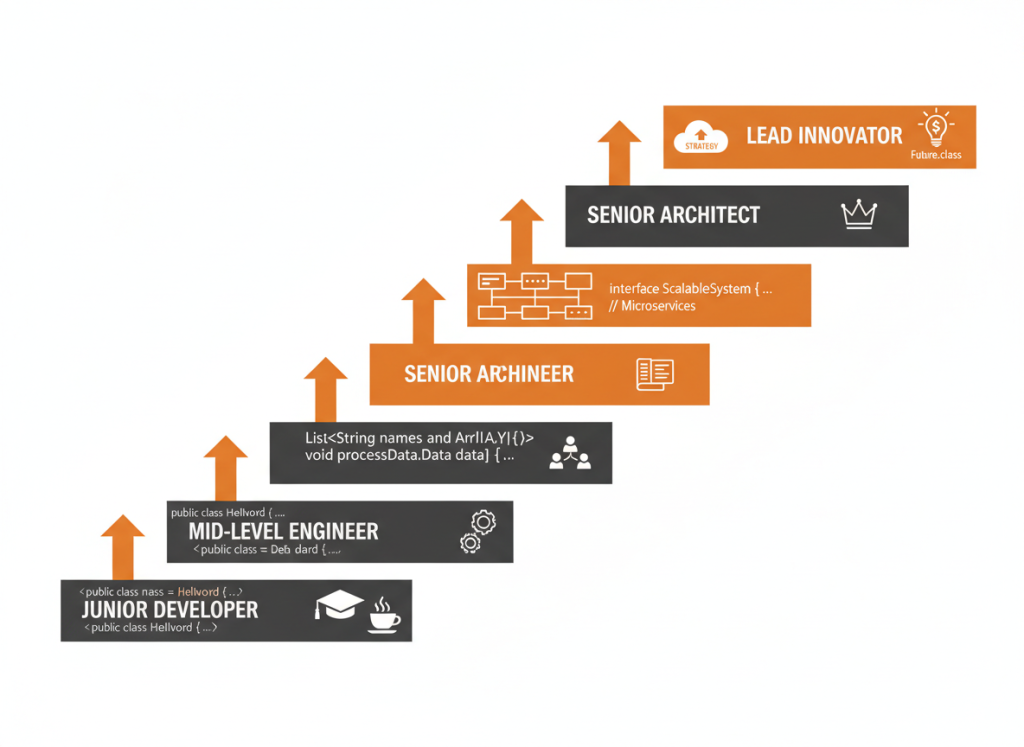
Clear career progression: The path from junior to senior Java developer is well-established. Expectations at each level are understood.
Strong salaries: Java developer salaries are among the highest for any language. Entry-level positions often start at $65,000-85,000.
Transferable skills: Java teaches OOP concepts, static typing, and enterprise patterns that transfer to C#, Kotlin, and other languages.
Challenges
Fewer entry-level positions: Java jobs skew toward experienced developers. Juniors face more competition for available roles.
Enterprise interview processes: Large companies have structured hiring that often requires CS fundamentals, algorithm knowledge, and multiple interview rounds.
Longer learning curve: Java requires understanding OOP, build tools, and frameworks before you’re productive. This takes longer than Python or JavaScript.
Best First Job Targets
- Corporate IT departments (banks, insurance, healthcare)
- Government contractors
- Enterprise software companies
- Android development teams
- Consulting firms
Python: The Versatile Choice
Strengths for First Job Seekers
Easiest to learn: Python’s syntax is readable and forgiving. You can write useful programs quickly, which keeps motivation high.
Multiple career paths: Python opens doors to web development, data analysis, automation, and machine learning. You can explore before specializing.
Strong bootcamp ecosystem: Many coding bootcamps teach Python. Employers are accustomed to hiring bootcamp graduates for Python roles.
Data science gateway: If you’re interested in AI/ML, Python is the required starting point.
Challenges
Competitive entry-level market: Python’s popularity means more candidates for each position. Standing out requires strong projects or specialization.
Web development competition: Python web roles compete with JavaScript/TypeScript, which dominate frontend and have strong backend options.
Lower ceiling in some domains: Pure Python backend roles at large tech companies are less common than Java or Go.
Best First Job Targets
- Data analyst positions
- Automation and scripting roles
- Startups using Django or Flask
- DevOps and infrastructure teams
- Junior data science positions
JavaScript: The Web Standard
Strengths for First Job Seekers
Unavoidable for frontend: Every website uses JavaScript. If you want to build user interfaces, you need it.
Full-stack possibility: Node.js lets you use JavaScript on the backend too. One language, entire applications.
Visible portfolio: You can deploy web projects that anyone can see and interact with. This makes demonstrating skills easier.
Highest job volume: More JavaScript jobs exist than any other language. Demand spans startups to enterprises.
Challenges
Frontend requires design sense: Building good UIs requires understanding user experience, not just code. This is a separate skill to develop.
Fragmented ecosystem: React, Vue, Angular, Svelte. The framework landscape shifts constantly. What’s popular today may not be tomorrow.
TypeScript becoming expected: Many jobs now require TypeScript, adding another layer to learn beyond JavaScript basics.
Best First Job Targets
- Frontend developer roles
- Full-stack positions at startups
- Web agencies
- Marketing technology companies
- E-commerce development
C#: The Microsoft Ecosystem
Strengths for First Job Seekers
Strong in specific industries: Game development (Unity), Windows applications, and Microsoft-stack enterprises hire C# developers.
Similar to Java: If you learn C#, picking up Java (or vice versa) is straightforward. The concepts transfer.
Excellent tooling: Visual Studio is powerful. The .NET ecosystem is mature and well-documented.
Challenges
Smaller market than Java or Python: Fewer companies use C# as their primary language outside the Microsoft ecosystem.
Geographic concentration: C# jobs concentrate in certain regions and industries. Availability varies by location.
Best First Job Targets
- Game development studios
- Companies using Azure and Microsoft stack
- Enterprise software on Windows
- Unity development positions
C/C++: The Systems Path
Strengths for First Job Seekers
High salary ceiling: Senior C++ developers at companies like Google, Jane Street, or game studios earn top-tier compensation.
Fundamental understanding: Learning C/C++ teaches you how computers actually work. Memory management, pointers, and low-level operations.
Challenges
Hardest to break into: Most C/C++ jobs require computer science degrees and expect existing experience. Few entry-level positions exist.
Steep learning curve: Memory management, undefined behavior, and complex syntax make C++ difficult for beginners.
Narrow application: Unless you specifically want game engines, embedded systems, or high-frequency trading, other languages are more practical.
Best First Job Targets
- Embedded systems (with EE background)
- Game engine development
- Systems programming internships
- Defense contractors (with clearance)
Direct Comparison: What Matters for Your First Job
Time to First Job
| Language | Typical Learning Time | Time to Job-Ready |
|---|---|---|
| JavaScript | 2-3 months basics | 4-6 months |
| Python | 1-2 months basics | 3-6 months |
| Java | 3-4 months basics | 6-9 months |
| C# | 3-4 months basics | 6-9 months |
| C++ | 6+ months basics | 12+ months |
These are rough estimates for self-taught learners studying part-time. Full-time bootcamps compress timelines. CS degrees take 4 years but open different doors.
Entry-Level Salary Comparison
| Language | Entry-Level Range (US) |
|---|---|
| Java | $65,000 – $85,000 |
| C# | $60,000 – $80,000 |
| Python (data focus) | $60,000 – $80,000 |
| JavaScript | $55,000 – $75,000 |
| Python (web focus) | $55,000 – $75,000 |
| C++ | $70,000 – $90,000 |
C++ entry salaries are high, but entry-level C++ jobs are rare. Java provides the best combination of salary and job availability.
Long-Term Salary Potential
All these languages can lead to high compensation at senior levels ($150,000+). The difference is more about company and role than language. A senior JavaScript developer at a FAANG company earns more than a senior Java developer at a small company.
Decision Framework
Answer these questions to find your best fit:
Do you want to build websites users interact with?
Yes: JavaScript (plus HTML/CSS) is required. This is non-negotiable for frontend development.
Are you interested in data analysis or machine learning?
Yes: Start with Python. The ML ecosystem is built on it.
Do you want stable employment at large, established companies?
Yes: Java opens the most doors at enterprises, banks, and corporations.
Are you interested in game development?
Yes: C# (Unity) or C++ (Unreal Engine) depending on which engine you prefer.
Do you want the fastest path to any development job?
Yes: Python or JavaScript. They have the gentlest learning curves and broadest entry-level markets.
Do you value long-term career stability over immediate job access?
Yes: Java. Harder to break in, but stable demand for decades.
The “Learn Multiple Languages” Reality
Here’s what career advice often misses: you won’t use just one language throughout your career. Most developers become proficient in 2-3 languages within their first few years.
Common combinations:
- Full-stack web: JavaScript + Python or JavaScript + Java
- Data engineering: Python + Java or Python + Scala
- Mobile: Java/Kotlin (Android) or Swift (iOS), often plus JavaScript for React Native
- Enterprise: Java + SQL + JavaScript (for internal tools)
Your first language teaches you programming concepts. The second language comes much faster. Don’t agonize over the “perfect” first choice; any of these languages will serve you well.
The Java Advantage for First Jobs
If you’re still undecided, here’s the case for Java specifically:
Teaches transferable fundamentals: OOP, static typing, design patterns. These concepts apply everywhere.
Forces good practices: Java’s structure (explicit types, required exception handling) builds habits that help in any language.
Enterprise doors open: Once you have Java experience, you can work at banks, healthcare companies, government contractors, and Fortune 500 corporations that might not consider JavaScript or Python candidates.
Higher average starting salary: Entry-level Java positions typically pay $5,000-10,000 more than JavaScript or Python roles.
Less competition per role: JavaScript and Python attract more beginners. Java’s steeper learning curve means fewer entry-level candidates competing for available positions.
Easier second language: After Java, picking up Python or JavaScript is straightforward. The reverse can be harder because Java introduces concepts (interfaces, access modifiers, static typing) that Python and JavaScript hide from beginners.
Getting Your First Job: Universal Advice
Regardless of language, these factors determine whether you get hired:
Build Projects
Create 2-3 substantial projects that demonstrate your skills. Deploy them where others can see them. A GitHub portfolio with working code beats certificates every time.
Practice Coding Problems
LeetCode, HackerRank, and similar platforms. Most technical interviews include algorithmic challenges. Practice makes the difference.
Apply Broadly
Entry-level hiring is a numbers game. Apply to 50+ positions. Expect many rejections before your first offer.
Network
Attend meetups, join Discord servers, connect on LinkedIn. Referrals dramatically improve your chances of getting interviews.
Consider Internships
If available to you, internships provide experience that makes full-time hiring easier. Many companies hire their interns directly.
Summary
For your first development job:
- JavaScript if you want frontend/web development and the highest job volume
- Python if you want the easiest start and flexibility to explore
- Java if you want enterprise stability, higher salaries, and transferable fundamentals
- C# if you want game development or work in Microsoft-focused companies
- C++ only if you specifically want systems programming and have patience for a longer path
Any of these languages can launch a successful career. Java’s combination of job availability, salary potential, and transferable skills makes it a strong choice, especially if you’re targeting enterprise employment or want a foundation that serves you for decades.
Related: Is Java Worth Learning in 2026? | Java Developer Career Path | Java vs Python | Java vs JavaScript
Sources
- Indeed. “Developer Job Postings by Language.” indeed.com (accessed January 2025)
- Stack Overflow. “Developer Survey 2024.” stackoverflow.com/survey
- PayScale. “Developer Salaries by Language.” payscale.com
- LinkedIn. “Skills Companies Need Most.” linkedin.com