Java developers earn competitive salaries across experience levels and locations. This guide breaks down what you can expect based on your experience, location, industry, and specialization. The data comes from PayScale, Glassdoor, Stack Overflow surveys, and job postings as of early 2026.
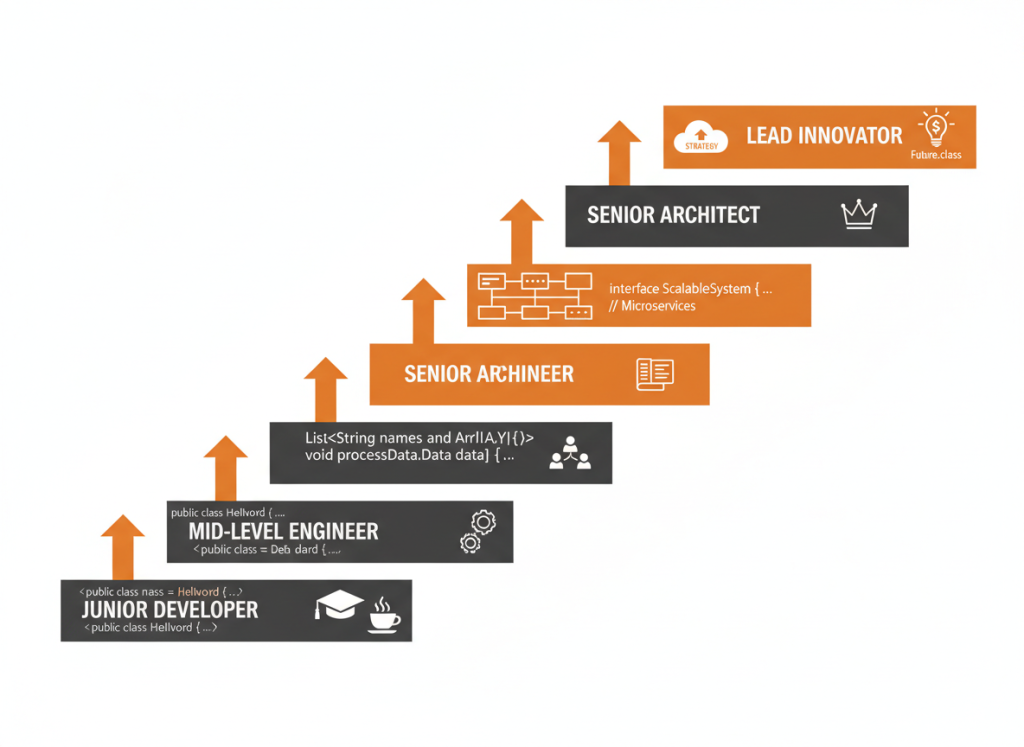
Salary by Experience Level (United States)
| Experience Level | Years | Salary Range | Median |
|---|---|---|---|
| Entry-Level / Junior | 0-2 | $55,000 – $85,000 | $70,000 |
| Mid-Level | 2-5 | $80,000 – $120,000 | $100,000 |
| Senior | 5-8 | $115,000 – $160,000 | $140,000 |
| Staff / Principal | 8+ | $150,000 – $220,000+ | $180,000 |
| Architect | 10+ | $140,000 – $200,000+ | $170,000 |
These figures represent base salary. Total compensation at tech companies often includes bonuses (10-20%), stock grants, and benefits that add 20-40% to base pay.
Salary by Location (United States)
Location significantly impacts compensation. Tech hubs pay more, but cost of living is higher.
| Metro Area | Senior Java Developer | Cost of Living Index |
|---|---|---|
| San Francisco Bay Area | $160,000 – $210,000 | 180 |
| Seattle | $150,000 – $195,000 | 150 |
| New York City | $145,000 – $190,000 | 170 |
| Boston | $135,000 – $175,000 | 145 |
| Los Angeles | $130,000 – $170,000 | 150 |
| Austin | $125,000 – $165,000 | 110 |
| Denver | $120,000 – $160,000 | 115 |
| Chicago | $115,000 – $155,000 | 105 |
| Atlanta | $110,000 – $150,000 | 100 |
| Dallas | $110,000 – $145,000 | 95 |
| Remote (US-based) | $120,000 – $170,000 | Varies |
Cost of living index uses 100 as the national average. A salary of $150,000 in Austin (index 110) provides more purchasing power than $180,000 in San Francisco (index 180).
International Salaries
Java developer salaries vary dramatically by country. These are approximate ranges for senior developers in local currencies, converted to USD for comparison.
| Country | Senior Developer (USD equivalent) |
|---|---|
| United States | $120,000 – $170,000 |
| Switzerland | $110,000 – $150,000 |
| United Kingdom | $80,000 – $120,000 |
| Germany | $70,000 – $100,000 |
| Netherlands | $65,000 – $95,000 |
| Canada | $70,000 – $110,000 |
| Australia | $75,000 – $115,000 |
| France | $55,000 – $80,000 |
| India | $15,000 – $40,000 |
| Poland | $35,000 – $60,000 |
| Brazil | $20,000 – $45,000 |
Remote work has enabled developers in lower cost regions to earn US or European salaries, though this varies by company policy.
Salary by Industry
Industry choice affects both salary and work environment.
Finance and Banking
Range: $130,000 – $200,000+ (senior level)
Investment banks, hedge funds, and trading firms pay top dollar. Goldman Sachs, JP Morgan, and similar institutions use Java extensively for trading systems, risk management, and core banking. Expect demanding hours and high-pressure environments. Bonuses can add 20-50% to base salary.
Big Tech
Range: $150,000 – $250,000+ (total compensation)
Google, Amazon, Netflix, LinkedIn, and Meta use Java for backend services. Total compensation includes significant stock grants. Amazon, in particular, relies heavily on Java. The interview process is rigorous, but the rewards are substantial.
Enterprise Software
Range: $110,000 – $160,000
Companies building B2B products like SAP, Oracle, Salesforce, and ServiceNow. Stable employment, reasonable hours, solid benefits. Less stock upside than startups but more predictable income.
Healthcare
Range: $100,000 – $150,000
Electronic health records, clinical systems, health tech. Growing demand with regulatory complexity. Epic, Cerner, and numerous health tech startups hire Java developers. Mission-driven work appeals to many.
E-commerce and Retail
Range: $110,000 – $160,000
Companies like Walmart, Target, and eBay alongside countless mid-size retailers. High-scale systems, interesting optimization challenges, seasonal crunch periods.
Government and Defense
Range: $90,000 – $140,000
Lower salaries but excellent job security, benefits, and work-life balance. Security clearances can increase compensation and limit job mobility. Contractors often earn more than direct government employees.
Startups
Range: $90,000 – $150,000 (plus equity)
Base salaries are often lower, but equity can be worth significant amounts if the company succeeds. High risk, high potential reward. Expect broader responsibilities and faster pace.
Salary by Specialization
Certain specializations command premium compensation.
| Specialization | Premium Over Base | Notes |
|---|---|---|
| Distributed Systems | +15-25% | Kafka, microservices, high-scale architectures |
| Performance Engineering | +10-20% | JVM tuning, profiling, optimization |
| Security | +10-20% | Application security, secure coding |
| Cloud Architecture | +10-15% | AWS, Azure, GCP expertise |
| Big Data | +10-15% | Spark, Hadoop, data pipelines |
| Android Development | +5-10% | Mobile expertise |
Factors That Increase Your Salary
Skills and Certifications
High-value skills: Kubernetes, AWS/Azure/GCP, Kafka, Spring Boot, microservices architecture, CI/CD pipelines, performance optimization.
Certifications: AWS Solutions Architect, Oracle Certified Professional, Kubernetes certifications. These help more for mid-level positions and consulting roles than for senior positions at tech companies.
Company Selection
Company size and funding stage matter:
- FAANG/Big Tech: Highest total compensation, competitive hiring
- Well-funded startups: Competitive base plus equity upside
- Public tech companies: Good compensation, liquid stock
- Enterprise companies: Stable, moderate compensation
- Small businesses: Lower pay, often more flexibility
Negotiation
Negotiating effectively can add 10-20% to an initial offer. Key strategies:
- Research market rates thoroughly before negotiating
- Get competing offers when possible
- Negotiate total compensation, not just base salary
- Ask for signing bonuses if base salary is capped
- Consider equity, PTO, remote work, and other benefits
Job Hopping vs Staying
Changing companies typically yields larger raises than staying put. Internal promotions average 3-5% increases, while job changes often bring 15-30% jumps. However, frequent moves (less than 2 years per role) can raise concerns about commitment.
Total Compensation Breakdown
Base salary is only part of the picture at many companies.
Example: Senior Developer at Big Tech Company
| Component | Amount |
|---|---|
| Base Salary | $180,000 |
| Annual Bonus (15%) | $27,000 |
| Stock Grants (annual vest) | $50,000 |
| 401(k) Match | $10,000 |
| Total Compensation | $267,000 |
Example: Senior Developer at Enterprise Company
| Component | Amount |
|---|---|
| Base Salary | $140,000 |
| Annual Bonus (10%) | $14,000 |
| 401(k) Match | $8,000 |
| Total Compensation | $162,000 |
Contractor and Freelance Rates
Independent contractors and freelancers typically charge hourly or daily rates.
| Experience Level | Hourly Rate (US) | Daily Rate (US) |
|---|---|---|
| Junior | $40 – $60 | $300 – $450 |
| Mid-Level | $60 – $100 | $450 – $750 |
| Senior | $100 – $150 | $750 – $1,100 |
| Expert/Architect | $150 – $250+ | $1,100 – $1,800+ |
Contractors must account for self-employment taxes, health insurance, retirement savings, and unbilled time. A $150/hour rate doesn’t directly compare to a $150,000 salary.
Remote Work Impact
Remote work has changed salary dynamics:
Location-adjusted pay: Some companies (Google, Facebook) reduce salaries for employees who move to lower-cost areas. Others (Basecamp, GitLab) pay the same regardless of location.
Expanded opportunities: Developers in smaller cities can now access higher-paying roles at companies without local offices.
Global competition: Companies can hire from anywhere, which can pressure salaries in some markets while raising them in others.
Typical remote premium: Remote-first companies often pay 90-100% of tech hub salaries regardless of location, making remote work financially advantageous for those outside major metros.
How to Research Salaries
Before negotiating, research thoroughly:
- Levels.fyi: Best for tech company compensation data, includes stock values
- Glassdoor: Wide coverage across industries, some data is outdated
- PayScale: Good for traditional industries
- LinkedIn Salary: Useful for role comparisons
- Blind: Anonymous professional network with salary discussions
- Job postings: Many states now require salary ranges in postings
Summary
Java developers earn strong salaries with significant variation based on experience, location, industry, and company. Entry-level positions start around $60,000-80,000, while senior developers in tech hubs can exceed $200,000 in total compensation.
To maximize your earning potential: build in-demand skills, choose high-paying industries, negotiate effectively, and be willing to change companies for significant raises. Location flexibility through remote work opens opportunities previously limited to those in major tech hubs.
Related: Java Developer Career Path | How to Prepare for a Java Technical Interview | 10 Java Interview Questions
Sources
- PayScale. “Java Developer Salary.” payscale.com (accessed January 2026)
- Glassdoor. “Java Developer Salaries.” glassdoor.com (accessed January 2026)
- Levels.fyi. “Software Engineer Compensation.” levels.fyi (accessed January 2026)
- Stack Overflow. “Developer Survey 2025.” stackoverflow.com/survey
- Bureau of Labor Statistics. “Software Developers.” bls.gov/ooh